Tuesday, October 24, 2006

50th anniversary mobile cellphone

Today seems to be the 50th birthday of the mobile cellphone. Of course the first cellphone can hardly be called a cellphone according to our current definitions or specifications. The first cellphone (by Ericsson) used to carry some 40kg of heavy weight. It must have been some suitcase that can be carried around and be placed in a car. The few cellphone users in those days were found amongst about 100 docters and lawyers around Stockholm and Gotenborg in Sweden. On the one hand because their jobs required to have a mobile communication channel, on the other hand because the mobile phone could only be afforded by the rich and wealthy. Due to the heavy weigh a car was required. Of course there were no GSM networks in those days. Ericsson launched the so called MTA (Mobile Telephony A) in october 1956 which may be considered an ancestor of the GSM network (AFT-4) that was launched in 1994.
I remember early pictures of mobile cellphones, a fine and wealthy looking young guy placing an enormous 'bag' on the hood of his car (a large and probably quite expensive BMW). On a timescale of 50 years it seems only a short period since I started using my first mobile phone. It must have been 1994 or so, quite a big device (a Siemens), with a battery that could be empty within just a few minutes. I was one of the first at my work carrying a mobile phone. I remember colleagues who thought of it as a ridiculous item: "are you that important that people must be able to reach you 24/7?". The early use of my mobile phone was mainly related to calls indicating that the train was delayed or that I was stuck in a traffic jam. It became easy letting people know that you were going to be late. It was appreciated by those who were expecting you for an appointment. Only one or two years later it was almost considered rude if a person did not contact you in case of a delay. Of course we had no SMS, MMS, WAP in those days, not to speak of inbuilt VGA camera's, WiFi, Bluetooth, Mobile Internet, and only a handful of ringtones. Still it was quite satisfactory to have a cellphone, given the state of technology at that time. Today the mobile cellphone (you can hardly consider it a phone in the strict meaning of the word anymore) it has become part of our daily life. In the Netherlands there are more cellphone contracts than inhabitants. It's sure that the number of functions will further increase in the following 50 years. It's already amazing to see all the new technological developments that are currently going on in the far east and which will (partly) reach the consumer in one or two years from now. If you live in South Korea, it is an everyday reality to have always-on superfast Internet -- broadband -- both in your cell phone and in your home. So picking up your cellphone to watch your favorite TV show is already there. Why still have a stand alone DVD player in your car?

Monday, October 23, 2006

Back to work again

Last week I had a short holiday break. After working to my (junk) e-mail I have my orientation again on the issues that are at stake in the near future. This week we are expecting to have the first evaluation results from our Sakai pilot projects. Furthermore, I have to finish a report on the use of laptops within the education of our faculty TNW. The first results look promising: students are moderately positive about the way intructors have embedded the use of laptops in their education. Some improvements can be made, however, such as increasing the number of courses where a laptop is required (on the other hand: watch the possible risks on RSI!). Furthermore, some buildings require a better and slower WLAN performance and the number of 220V points are too low in some lecture rooms. A final important goal this week is a meeting with my DU projectmanager about the Integrated Science project. The first course is running right this moment according to the new didactical concept. However, we foresee some problems with the implementation in other courses.

Friday, October 13, 2006

Asynchronous transition

This week I spent quite some time on 3TU issues. The federation of the three Dutch technical universities (3TU) will be formally established on April 1st, 2007. One of the jobs that needs to be done is providing e-learning facilities for 3TU students and instructors. The 3TU Graduate School already launched two master programs (Embedded Systems and Sustainable Energy Technology) in September 2006. For the short term the students and instructors can logon to their own virtual learning environment (VLE; TeleTOP, Blackboard or StudyWeb) and to the VLE of the other two institutes. However, this will not be a sustainable solution. The University of Twente is seriously looking into Sakai - as you may know -, as a possible subsitution for TeleTOP. The two other TU's have quite another time frame for reconsidering their VLE, if at all. This is the first type of asynchronous transition, which makes it difficult to define a common 3TU VLE. Moreover, it is not clear whether they will make the same choices as Twente will make. A possible solution might be found in the definition of a common functional architecture in terms of a set of services. The components fulfilling these services may differ between universities. A second type of asynchronous transition can be seen between the 3TU entities that work on different aspects of the fedaration process. The (board) of the 3TU Graduate School has already some high expectations about pilots for the new 3TU VLE. However, the development groups that are involved in the master programs are not in a big hurry and want to start easily, e.g. by starting with lectures in streaming video format. Sharing content and collaborative working accross institutes is not an issue yet, but may develop slowly during the current academic year. The VLE projectgroup will proceed anyway, looking into more detail into the possibility of setting up a common framework in which a set of services will be defined. When the question is there (and it will be), we hope to be ready to provide an adequate solution.

Tuesday, October 10, 2006

Integrated Science Education (ISE)

Since the beginning of 2006 I am the projectmanager of a DU project called Integrated Science Education (ISE). The basis idea is to integrate (or incorporate if you like) mathematics content in science courses. It is a major problem that students in a course on Quantummechanics for example have big problems in applying the correct mathematical concepts. The preceding Calculus I course does not look forward into possible contexts in which the mathematical concepts can be applied. The other way round the Quantummechnanics course doesn't look back in order to incorporate the abstract mathematical concepts into the cognitive schemes of a student. In the didactical model we strongly stress that explicit feedback to previous mathematical concepts is needed in order to incorporate them. It is more that just mentioning that the concept has been addressed earlier. Students should be confronted again with exercises and assignments, so they have to be actively involved in understanding and applying the relevant concept(s). The point is that transfer between the two domains is a big problemn. The project is a so-called transition project focused on integrating (abstract) math into science courses. Moreover, we are trying to include applications like Maple, Maple TA, and Simulink that can provide a natural 'bridge' between the two domains. At this moment we are close to finishing the instructional design. In two weeks the first course (Engineering for Advanced Technology) that is changed according to the principles of ISE will run at the University of Twente. Next courses will start in january 2007. Other partners in this project are the University of Amsterdam and Saxion University. The first evaluation results are expected by the end of November. Obviously, these results will determine whether the ISE model will be adopted in other curricula or even other institutions.

Saturday, September 30, 2006

Marom Ayoubi on D66 candidate list


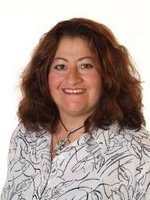
I am proud to announce that on September the 30th my wife Marom Ayoubi was chosen by the members of D66 to be on the final candidate list for the National elections to be held on November 22nd this year. D66 (the Dutch social-liberal party Democraten 66) is a member party of the European Liberal Democratic Reform party (ELDR) and the Liberal International (LI). The candidate list has a fixed part of 25 national candidates and a part of 5 candidates who are known for their regional work and acitivities. Marom will be in the regional part of the list, which means that she will be listed on the candidate lists in 6 of 19 election districts. These will be mostly in the south of the Netherlands. Marom has a background in education and pedagogy, which will be two of her key drivers within the election campaign.

Friday, September 29, 2006

"Voorbij de grenzen van de ELO II"

Yesterday, sep 28th I visited this conference ("Beyond the boundaries of the Electronic Learning Environment") which was held for the second time in Utrecht, The Netherlands. Starting with almost 200 attendees, the morning part of the conference was provided by three distinguished, international speakers starting with Chuck Severance, Executive Director of the Sakai Foundation. For me this was the second time in three weeks that I attended a presentation of Chuck. This one was quite different from the one in Luebeck. Chuck provided a general overview of Sakai and the vision behind the community. He gave us a very clear perspective on how to position Sakai as a teaching, learning research and most of all collaboration tool. In that perspective Sakai is more related to Lotus Notes or Sharepoint that to the typical VLE's like Blackboard or Moodle which are designed from a traditional teaching perspective.
Although already familiar it was good to hear about the way the development community works. First, there is someone having an idea and contributes that to the community. Secondly, one or more developers in the community may decide to develop a provisional version of the tool. The third and most exiting part is probably the decision whether or not it should be implemented in a next production release. The decision on this is not a matter of getting a lot of votes, but on experiences from people who used it in their daily practice. If they like, it's stable and the QA tests have proved to be succesfull, the component might included in the next production release.
One of the attendees asked Chuck's opinion about the Blackboard patent in the US. Chuck made it very clear (and I strongly agree on that), that this patent is rather ridiculous. It's like having a patent on 'sunrise', in this specific case saying that there is a distinctive role between instructors and learners. It's a big question whether the patent will hold in court. In a worst case scenario you may be confronted with a payment for the patent, maybe $ 5000 a year, but it doesn't matter if you use Sakai or another LMS. So his strong advice is: proceed with what you are doing and what you believe in is right.

The presentation of Sarah Porter (JISC) on the e-Framework did not include very much new information for me. Although it was good to hear (and in accordance with a shift of attention within the Sakai community) that services are more and more considered from the USER DOMAIN. Mapping the user provides information on how to design necessary services.

The third interesting keynote was by Scott Wilson (CETIS) on the personal learning environment (PLE). Another acronym after ELO, ILE, VLE, LMS, CAI, ITS, etc... ? I like the idea very much and believe PLE is indeed a next step forward, relating to the Web 2.0 generation in which the web has become a read-write environment in which the user can actually influence what's happening for him/her. Formal and informal learning are being combined, long lasting communities of practice (before and after the course someone is taking) and using shared goals to forge a social identity are key issues in the PLE approach. Important to note is that a PLE is personally constructed, it is not a box you provide. It's about tailoring the infrastructure so it will be supportive for you.
Interesting links to visit:
I also joined Scott's afternoon workshop on PLE. One of the questions was about the role of the teacher in a PLE. What strategies can a teacher take, because you cannot be sure what students actually see within there PLE. One of the solutions could be that a students gives two or three things that can be tracked (e.g. by RSS) as proof of achieving a certain competence. It's clear that the variety of information sources becomes much bigger, which makes it a big challenge to deal with in your role as a teacher.
Another, more fundamental issue is how to determine that person x indeed achieved learning objective y? Promoting open access is one thing, but what is the real incorporation into cognitive schemata of the learner if information can be collected in a very easy, open way. Copy-pasting a nice piece of work is not difficult, but do they actually learn? What's the transfer to other parts of the curriculum or further in time: to the outside world.

A workshop that strongly connects to the PLE was the workshop about ELGG. It was the first time I heard about it. It is based on a model of a distributed global learning environment. ELGG may take information from different underlying systems and bring it together in one coherent environment for the user. Interesting features are:
  • Personal and community blogging
  • Tagging
  • Private and public communities
  • Podcasting
  • Social Networking
  • Learner defined spaces
  • Personal and community file storage

Friday, September 22, 2006

Meeting deadlines

This week was more or less about meeting deadlines. First I visited the "Haal meer uit de DU" conference for which I had to prepare a poster session. Moreover, I also had to deliver an instructional design document for the DU-project Integrated Science Education. This project is conducted by a consortium in which Twente University, the University of Amsterdam and Saxion are participating. I spent quite some hours on writing the document which will be discussed by a review committee next tuesday. So far, I have the impression that I managed to find a compromise between the insights that were shared within our team sessions earlier this year. Among other issues, the discussion was focused on whether the 4C-ID model (van Merrienboer) would be usable within our project. In the academic context there is still a lot of hesitation towards competence based learning models, although it's slightly changing nowadays. There is the impression that everything will be about skills and the learning of (abstract) knowledge will be neglected. I think this impression is not correct. Especially 4C-ID is flexible enough to incorporate the knowledge component. Tuesday the team will discuss the document with the review committee. The interesting question is: will they agree with our basic approach or do we need to make fundamental changes before we can continue with the project? You'll read more about it next week.

Wednesday, September 20, 2006

"Haal meer uit de DU"

On september 19th I visited the conference of the Digital University (a consortium of dutch universities and institutes for higher vocational education). The Dutch title "Haal meer uit de DU" means that the focus is to share products and experiences that have been achieved in the past year in a broad range of collaborative projects.

Besides having my own poster presentation on the project "Integrated Science Education" I visited two workshops and two plenary sessions. In my opinion the workshops were highly inspiring. The first one I joined was about Web 2.0. In summary it gave a good overview of using social software (wiki, blog, social bookmarking and social networking) in an educational context. Some conclusions were that a group blog is more suited to support learning than a blog which is maintained by one or two people. Group reflection is the central issue.
Wiki's provide a common feeling of working together on a result. It can be confronting on the one hand (others may change or delete your contribution), but everyone is invited to contribute. Everyone can be engaged on an equal basis.
Unfortunately the session itself was not very interactive (only presentation and a few short questions).

The other workshop I visited was mainly given by students who were involved in the instructional design process of a part of the curriculum. Based on their own experiences they worked together with the teachers, trying to improve courses for future student groups. Both students and teacher were enthousiastic about this interesting approach.

The plenary sessions (keynote by Marinus Dekkers and a panel discussion at the end) were not very inspiring to me. I did not hear many new insights, and especially the acoustics in the lecture hall were not very good to keep track of the panel discussion. The discussion itself was also rather vague. My overall impression (which was shared by some people I talked at the conference) is that it is very much about competence based learning, i.e., a focus on vocational education. However, within the (Dutch) university context this is not (yet) the mainstream of their didactical approach.

Wednesday, September 13, 2006

Lisbon objectives at stake in the Netherlands?

The main objective of the Lisbon agenda is to achieve a EU as 'the most dynamic and competitive knowledge based economy in the world capable of sustainable economic growth with more and better jobs and greater social cohesion, and respect for the environment'. This process should be concluded by 2010. The question is, however, will me manage? Former Dutch prime-minister Kok questioned the achievement of the Lisbon agenda during a speech he gave in 2004. We were already behind schedule. On a government level the issue of becoming a knowledge based economy is a key issue in the politics of D66. In the past four years they have succeeded to claim extra funding for (higher) education. We are two months away from new elections. The forecast at this moment tells that D66 may be reduced to one representative in the house of parliament. It's not likely that they will become part of the new Dutch cabinet, which brings up the question to what extent the Lisbon agenda will remain on the agenda. In their election programs other parties also claim to increase investments in education, but the question is whether or not this will be the case once they have been elected. We may prevent this from happening or at least try to reduce the negative impact by electing D66, hoping that they will stay strong enough to keep asking attention for the knowledge based economy.

Monday, September 11, 2006

Are we becoming NET geners?

One of the claims about the (future) NET generation (see the work by e.g. Oblinger, Veen, Prensky) is that these youngsters are perfectly capable of using a large set of ICT tools (e.g., smartphone, laptop, mp3 player, PS2) in a multichannel fashion. At the university where I work it can be observed that more and more students have their own laptop, which they use during the time that the teacher is giving his lecture. Do they perform learning related acitivties? Well certainly not the whole time, basing myself on the number of MSN and Skype conversations that could be observed. The conference I visited last week showed a remarkable number of laptop users during the conference presentations. I was able to make several observations about what people were actually doing: writing software code and sending e-mail were the two acitivities I noticed most. Indeed, I saw one guy taking notes about the presentation! Were the others not listening, or not interested then? At least one guy was still able to pose a relevant question, even while he produced some lines of software code in the very last minutes before. So the interesting question is: are we (30+ generation) learning to become NET geners too? It seems that we are learning quickly. Nevertheless, from a cultural perspective it's still a strange phenomenon that most of your listeners look at their computer screen instead of looking at you. You don't get the non-verbal feedback about whether they understand, agree or disagree to what you are saying.

Sunday, September 10, 2006

Kicking off a new week

Well, we're at the start of a new interesting week. Last week I visited an interesting conference in Lübeck (Germany) about which I created a posting in the Sakai-NL weblog. This week will probably be focused on revitalizing another large project I am running as a projectmanager. This project is about Integrated Science Education. We have to deliver the description of a didactical approach how to integrate mathematics content with content from science subjects. Moreover, it should not only be a theoretical elaboration about the pro's and con's of this approach, but also a practical guide for teachers which they can use in their daily work.

Friday, September 08, 2006

Welcome

Hi,
Welcome to this new blog. I already observed for a while what a blog is, how people use it and what would be the use for me. Well, one of the things I sometimes think about is writing a sort of column. These can be about something I encountered during my work or about something I heard in the news. The blog can be an ideal environment to share this with others and get reflections on it. The biggest challenge for me is probably to find the time to write postings on a regular base. So, time will learn I guess.